Rudraksha Types (1 to 14 Mukhi): Benefits, Rules and How to Wear
 By Monica Kapoor · Vedic astrologer & tarot mentor · Masters in Vedic Numerology · 15+ years of practice
Rudraksha is the dried seed of the Elaeocarpus ganitrus tree, sacred to Lord Shiva. The types of rudraksha are named by the number of natural lines (mukhis) on the bead. The Shiva Purana describes 14 types, from 1 Mukhi to 14 Mukhi, each linked with a deity and a mantra. 5 Mukhi is the most common and suits almost everyone.
Almost every week someone shows me a rudraksha they bought online and asks, “Is this right for me?” Usually it came with a long list of promises and a price that made them nervous. Sometimes it is a 1 Mukhi bead that was almost certainly carved. Sometimes it is a perfectly good 5 Mukhi that they were told was “too ordinary”.
I don’t sell rudraksha, so I can be plain with you. In this guide I’ll go through all 14 types with their deity, planet and mantra, how to choose one, the wearing rules, how to use a mala, how to tell a real bead from a fake, and who should be careful.
What is rudraksha?
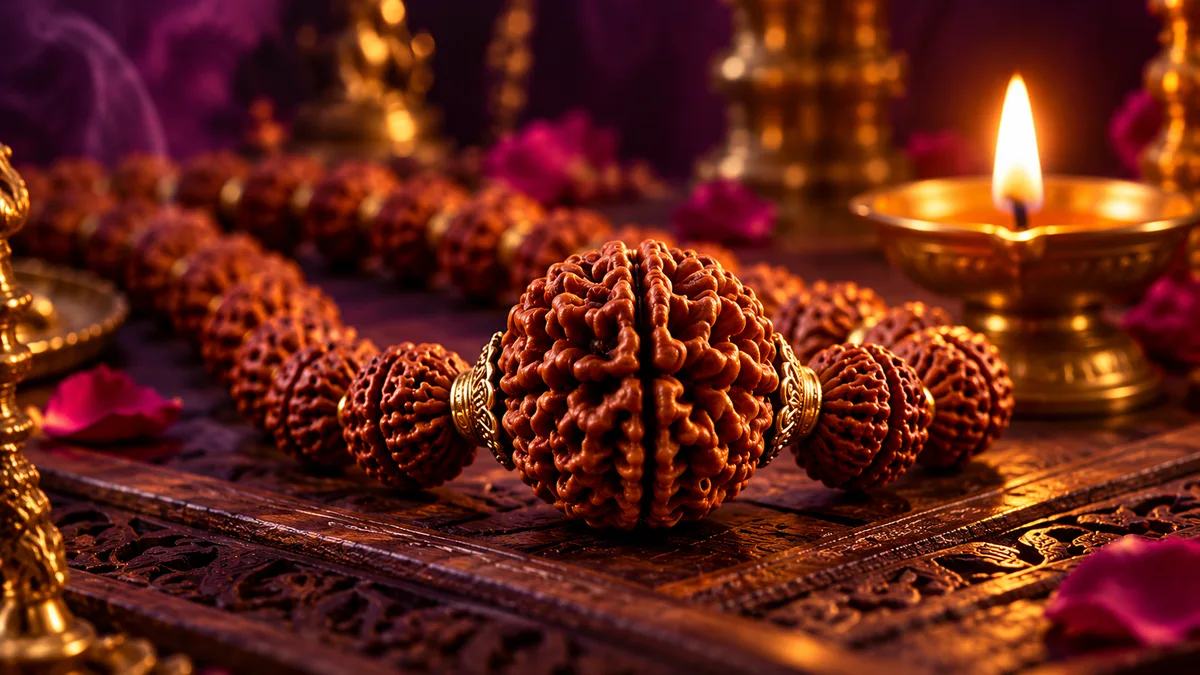
The word comes from Rudra (Shiva) and aksha (eye, or tear). The traditional story says the trees grew from Shiva’s tears after long meditation. That is why rudraksha is worn for protection, calm and devotion, and why it has been used as a japa mala for centuries.
Botanically, a rudraksha is the hard stone inside the blue fruit of the Elaeocarpus ganitrus tree. The fruit is soaked, the pulp removed, and the stone cleaned and dried. What you wear is that stone, with its natural grooves and a natural hole through the centre.
Most beads in the market come from Nepal (larger beads with deep, clear mukhis) and Indonesia (smaller, smoother beads, popular for malas). India also produces some, mainly from Uttarakhand and the south. Both Nepali and Indonesian beads are genuine rudraksha. Size and origin change the price, not the sanctity.
What is a mukhi, and how do you count it?
A mukhi (face) is a natural line or cleft that runs on the surface of the bead from the top (where the stalk was) to the bottom. Count the lines that go all the way from one end to the other. That number is the bead’s mukhi.
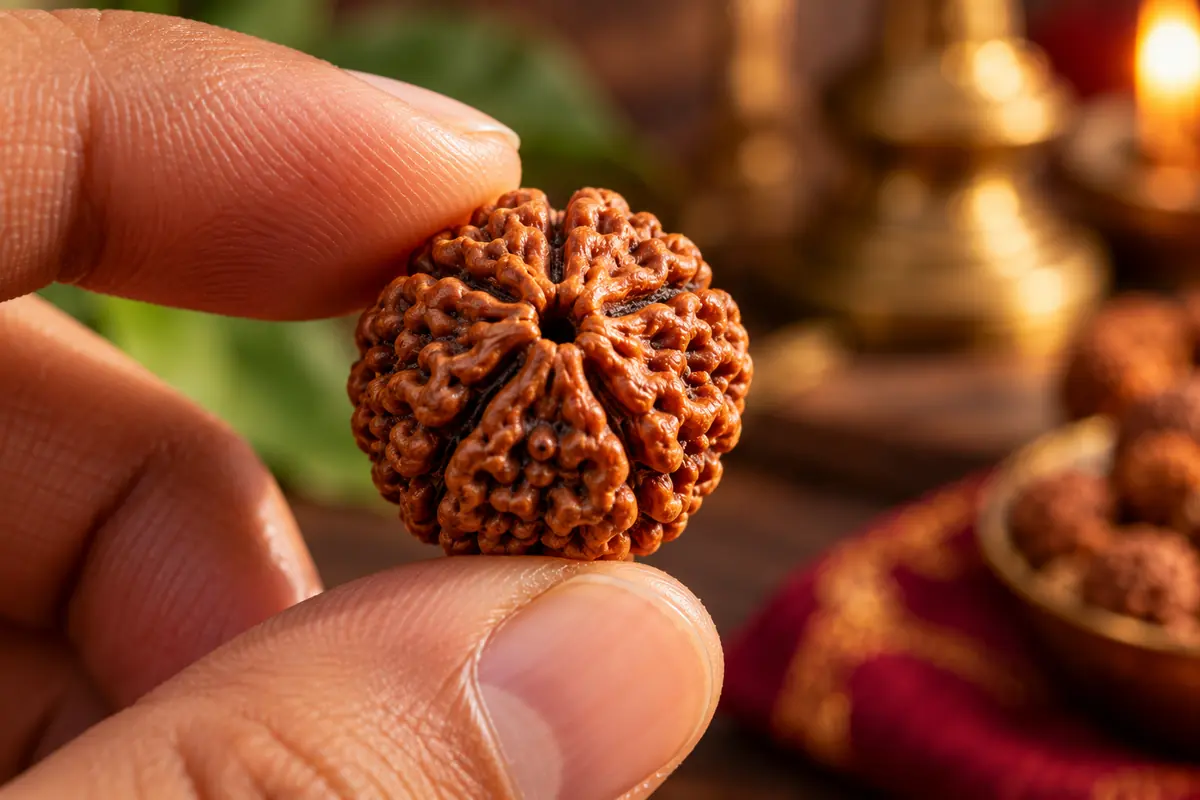
- Lines that stop halfway don’t count.
- In a genuine bead, each outer line matches one seed chamber inside. This is exactly what a lab X-ray checks.
- Beads with 1 to 21 mukhis are found, and rarer ones beyond that. The higher the count, the rarer and costlier the bead.
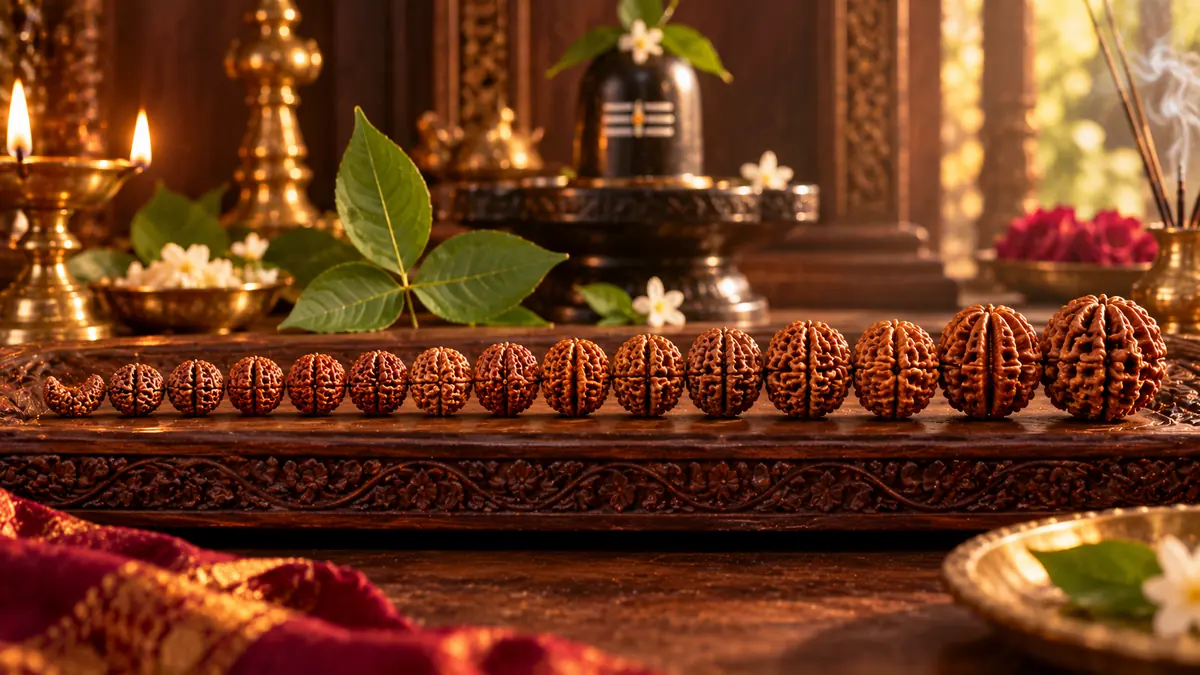
Types of rudraksha: 1 to 14 mukhi table
The Shiva Purana describes fourteen types. This table brings together the deity and mantra from that tradition, the planet most astrologers link with each bead today, and what it is traditionally worn for.
| Mukhi (Hindi name) | Deity | Planet (common view) | Mantra | Traditionally worn for |
|---|---|---|---|---|
| 1 Mukhi (Ek Mukhi) | Shiva | Sun | Om Hreem Namah | Meditation, detachment, spiritual focus |
| 2 Mukhi (Do Mukhi) | Ardhanarishvara (Shiva–Parvati) | Moon | Om Namah | Harmony in relationships, emotional balance |
| 3 Mukhi (Teen Mukhi) | Agni | Mars | Om Kleem Namah | Letting go of past guilt, confidence, energy |
| 4 Mukhi (Char Mukhi) | Brahma | Mercury | Om Hreem Namah | Study, memory, speech, creativity |
| 5 Mukhi (Panch Mukhi) | Kalagni Rudra | Jupiter | Om Hreem Namah | Peace of mind, general wellbeing, japa; suits everyone |
| 6 Mukhi (Chhah Mukhi) | Kartikeya | Venus | Om Hreem Hum Namah | Willpower, grounding, artistic and family life |
| 7 Mukhi (Saat Mukhi) | Mahalakshmi / Ananga | Saturn | Om Hum Namah | Wealth, steady finances, patience |
| 8 Mukhi (Aath Mukhi) | Ganesha | Rahu | Om Hum Namah | Removing obstacles, success in new work |
| 9 Mukhi (Nau Mukhi) | Durga | Ketu | Om Hreem Hum Namah | Courage, protection, fearlessness |
| 10 Mukhi (Das Mukhi) | Vishnu | No single planet (protective) | Om Hreem Namah | Protection from negativity, stability |
| 11 Mukhi (Gyarah Mukhi) | Ekadasha Rudra / Hanuman | No single planet | Om Hreem Hum Namah | Strength, discipline, fearless speech |
| 12 Mukhi (Barah Mukhi) | Surya (the Adityas) | Sun | Om Kraum Kshaum Raum Namah | Leadership, vitality, self-respect |
| 13 Mukhi (Terah Mukhi) | Kamadeva / Indra | Venus | Om Hreem Namah | Attraction, charm, fulfilment of wishes |
| 14 Mukhi (Chaudah Mukhi) | Hanuman / Parama Shiva | Saturn | Om Namah | Intuition, protection, sound decisions |
The deity and mantra come from the Shiva Purana tradition. The planet links are a later layer added by astrologers, and they are not the same everywhere. For example, 3 Mukhi is linked with Mars by some and the Sun by others, 4 Mukhi with Mercury or Jupiter, 6 Mukhi with Venus or Mars, 7 Mukhi with Saturn or Venus, and 14 Mukhi with Saturn or Mars. Some sellers also give “Om Namah Shivaya” for every bead. If two websites disagree, this is why. When I use a bead as a planetary remedy, I go by the chart, not by the table.
Each rudraksha type explained
1 Mukhi rudraksha (Ek Mukhi)
The bead of Shiva himself, linked with the Sun and with deep meditation. A true round 1 Mukhi from Nepal is extremely rare, which is why most “Ek Mukhi” beads sold cheaply are carved or are the half-moon (Kaju) variety from South India. The Kaju bead is a genuine 1 Mukhi type, but it is a different shape. Buy only with an X-ray report.
2 Mukhi rudraksha (Do Mukhi)
Represents Shiva and Parvati as one. Worn for harmony between partners, within a family, or between mind and heart. Often suggested when the Moon is weak and emotions swing.
3 Mukhi rudraksha (Teen Mukhi)
Ruled by Agni, the fire that purifies. Traditionally worn to release guilt and old patterns and to rebuild confidence and drive.
4 Mukhi rudraksha (Char Mukhi)
Linked with Brahma, the creator, and the four Vedas. A favourite for students, teachers, writers and speakers.
5 Mukhi rudraksha (Panch Mukhi)
The most common bead and the one I suggest most often. It is ruled by Kalagni Rudra and linked with Jupiter. It is used for calm, good health habits and daily japa, and it suits men, women and students alike. Nearly all japa malas are made from 5 Mukhi beads. “Common” here means accessible, not weaker.
6 Mukhi rudraksha (Chhah Mukhi)
The bead of Kartikeya, Shiva’s son and commander of the gods. Worn for willpower and focus, and often linked with Venus for creative and family life.
7 Mukhi rudraksha (Saat Mukhi)
Linked with Mahalakshmi and with Saturn. Worn for steady wealth, a disciplined approach to money, and patience during difficult Saturn periods. It is one of the most searched beads for a reason. For money-related remedies, see my abundance and prosperity alignment work.
For the deity, scriptures, wearing vidhi, price and how to spot a fake, read my complete 7 Mukhi Rudraksha guide.
8 Mukhi rudraksha (Aath Mukhi)
The bead of Ganesha, the remover of obstacles, and linked with Rahu. Worn before new ventures and during a difficult Rahu period. Read more in my guide to Rahu and Ketu in astrology.
9 Mukhi rudraksha (Nau Mukhi)
Ruled by Goddess Durga and linked with Ketu. Worn for courage, protection and inner strength, especially during Navratri sadhana.
10 Mukhi rudraksha (Das Mukhi)
Ruled by Vishnu, the protector. It is not tied to one planet and is worn as an all-round shield against negativity and fear.
11 Mukhi rudraksha (Gyarah Mukhi)
Represents the eleven Rudras and is widely linked with Hanuman. Worn for strength, self-discipline and fearless speech, often by people in public roles.
12 Mukhi rudraksha (Barah Mukhi)
The bead of the Sun (the twelve Adityas). Worn for leadership, vitality and confidence, and by people in administration or government work.
13 Mukhi rudraksha (Terah Mukhi)
Linked with Kamadeva and Indra, and with Venus. Worn for charm, attraction and fulfilment of wishes.
14 Mukhi rudraksha (Chaudah Mukhi)
Called Deva Mani, linked with Hanuman and Parama Shiva, and with Saturn. Worn for intuition and protection, and for clear judgement in high-stakes decisions. It is rare and costly. Most people do not need it.
Special beads: Gauri Shankar, Ganesh and 15–21 mukhi
- Gauri Shankar: two beads naturally joined, representing Shiva and Parvati. Kept for marital harmony and family unity, often in the puja room.
- Ganesh rudraksha: a bead with a natural trunk-like bump. Worn for removing obstacles.
- Garbh Gauri: a joined pair where one bead is smaller. Traditionally linked with fertility and children.
- 15 to 21 Mukhi: rare beads found mainly in Nepal. They are not described in the Shiva Purana and are usually collector or advanced-sadhana beads. I rarely suggest them.
Which rudraksha is best for me?
There are three honest ways to choose:
- If you just want calm, protection and a japa bead: choose 5 Mukhi. You cannot go wrong with it.
- By goal: study (4), relationships (2 or Gauri Shankar), money (7), new beginnings (8), courage (9), leadership (12).
- By your chart: the most precise method. I look at which planet is weak or troubling and which dasha is running, then choose a bead for that planet, along with your lagna lord.
Choosing by date of birth alone (your sun sign or number) is popular online, but it is a rough shortcut. If you are spending a lot on a rare bead, have your chart checked first. A kundli reading tells you which planet actually needs support.
Not sure which rudraksha suits your chart?
Send me your birth details. I’ll tell you which mukhi supports your chart and running dasha, how to wear it, and the mantra to use. I don’t sell beads, so you’ll get a straight answer.
How to wear rudraksha: rules for the first time
- Choose the day. Monday (Shiva’s day) is the most common. Some choose the day of the bead’s planet.
- Clean the bead. Rinse in clean water, or raw milk followed by water. Dry it.
- Energise it. Many families soak a new bead in ghee or mustard oil overnight, then wash it. Keep it before Shiva in the morning.
- Chant. Say “Om Namah Shivaya” and the bead’s own mantra (from the table) 108 times, or at least 9 times.
- Thread it. Use red or yellow silk or cotton thread, or silver or gold. Wear it so it touches the skin.
- Wear it. Around the neck (most common), on the right wrist as a bracelet, or on the upper arm.
- Keep it up. Chant the mantra briefly each morning. Remove it before soap, chemicals or heavy sweating.
Traditional rules (and how strictly to follow them)
- Remove before sleep, intercourse and visiting a cremation ground. These are widely agreed.
- During periods: some traditions ask women to remove it. Others, including many modern teachers, say a bead of Shiva doesn’t become impure. Follow the practice of your family or guru. There is no single rule.
- Alcohol and non-veg: traditionally avoided while wearing. If you can’t, take the bead off before and wear it again after bathing.
- Don’t lend or share your worn bead. It is considered personal.
- Oil it every few months with a little sandalwood or mustard oil to stop it drying and cracking.
Rudraksha mala: 108+1 beads and how to use it
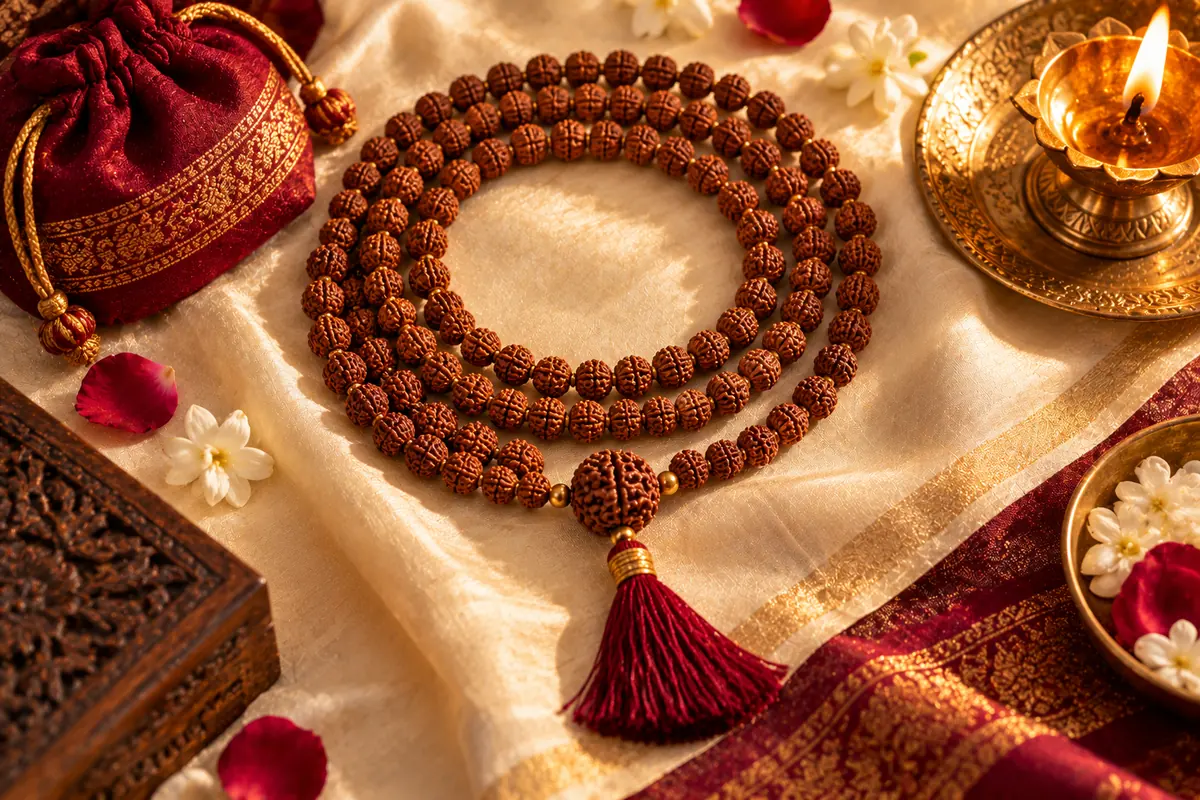
A rudraksha mala is a string of rudraksha beads used for japa (mantra repetition), or worn for protection. The standard counts are:
| Mala | Beads | Used for |
|---|---|---|
| Full japa mala | 108 + 1 | Daily mantra japa; one round = 108 chants |
| Half mala | 54 + 1 | Shorter japa, or wearing |
| Quarter mala / wrist mala | 27 + 1 | Wearing; short practice |
The extra bead is the meru (also called sumeru or guru bead). It marks the start and end of a round. In japa, you count with the thumb moving bead by bead and turn the mala back at the meru, rather than crossing it. Traditionally, the index finger is not used to move the beads.
Keep a japa mala and a wearing mala separate if you can. A japa mala is usually kept in a cloth pouch in the puja space. Most malas are 5 Mukhi beads, which is why they are affordable and suit everyone.
How to identify original rudraksha
The internet is full of “easy tests”. Most of them don’t work.
- Water test (myth): “A real bead sinks.” Unripe genuine beads can float, and some fakes are weighted with lead so they sink. A study published by Hinduism Today, done with the Indraprastha Gemological Laboratory (IGL) in New Delhi, explains exactly this.
- Copper coin test (myth): “A real bead rotates between two coins.” Any round object can be made to move this way.
- Boiling test: can damage a genuine bead. Avoid it.
What actually works:
- Look closely with a magnifier. Natural mukhi lines are uneven and run fully from top to bottom. Carved lines look too neat, or stop short. Check for glue at joins (common in fake Gauri Shankar and Ganesh beads).
- Check the hole. Most genuine beads have a natural channel. A freshly drilled, perfectly clean hole on a cheap “1 Mukhi” is a red flag.
- Get an X-ray certificate for anything expensive. The X-ray shows the seed chambers inside. The count should match the outer mukhis. Check the certificate number directly with the lab.
- Know the price reality. 5 Mukhi beads are common and cheap. A round 1 Mukhi for a few hundred rupees is not genuine. Be wary of “free rudraksha” offers that end in a costly energising fee.
- Know Bhadraksha. A lookalike seed from a different tree is sometimes sold as rudraksha, often with carved lines.
Who should be careful wearing rudraksha
Rudraksha is gentle, and almost anyone, of any age, gender or background, can wear it. A few cautions are still worth knowing, and no seller page mentions them:
- Small children: loose small beads are a choking risk. Use a secure, well-knotted thread and supervise young children.
- Skin allergies: some people react to the oils used for energising, or to a metal cap. Switch to plain silk thread.
- Health conditions: rudraksha is a spiritual support, not a medicine. Never stop or replace treatment for blood pressure, anxiety or any other condition.
- High mukhi beads without guidance: rare beads are powerful in tradition and very costly. Have your chart checked before spending.
- Women and girls can wear rudraksha. The only debated question is about wearing it during periods (see above).
The rudraksha tree
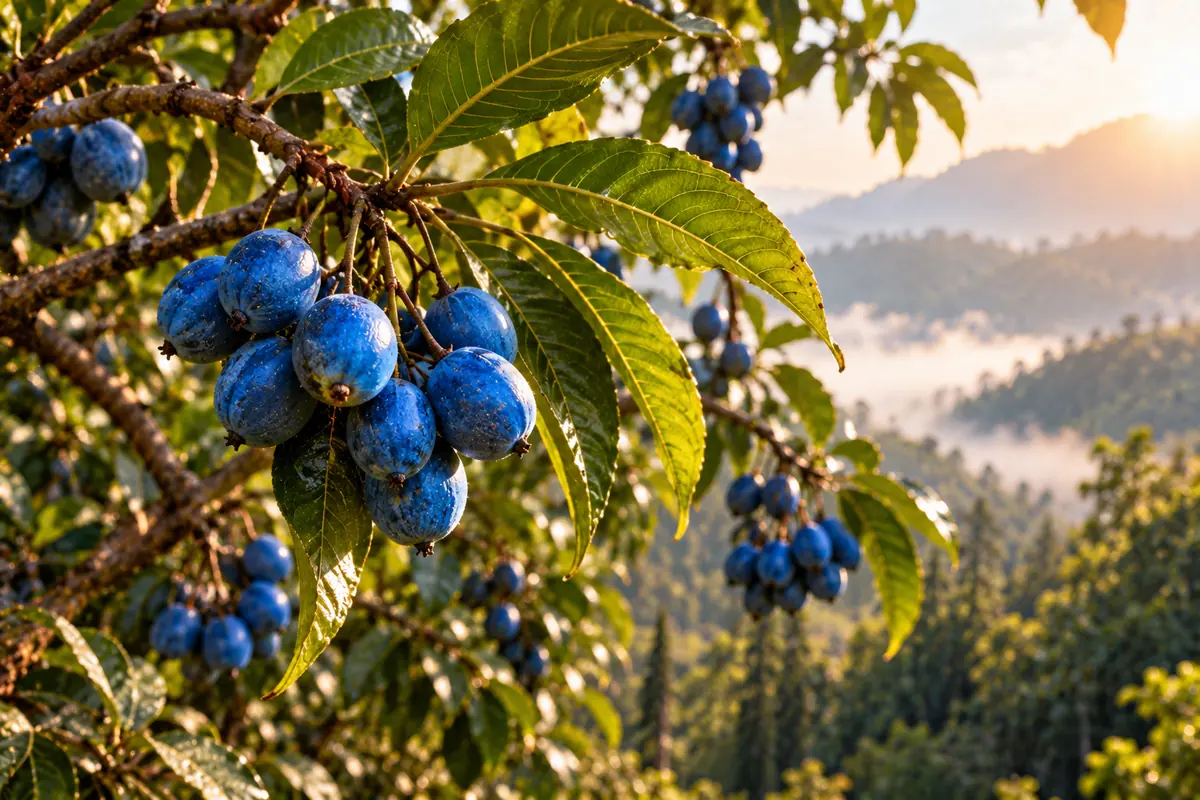
The rudraksha tree is Elaeocarpus ganitrus, a tall evergreen tree that can reach 18–24 metres. It grows from the Gangetic plain and Himalayan foothills into Nepal, and across Southeast Asia, Indonesia and beyond. In India, groves are found mainly in Uttarakhand, with other varieties in the south.
- The fruit is bright blue. The colour comes from the structure of the skin, which reflects light, not from pigment. Underneath is the hard stone we wear.
- Time to fruit: sources differ, from about 3–4 years to 10 years or more, depending on climate and variety.
- Can you grow one at home? Yes, in a warm, humid climate with space for a large tree. Saplings are sold by nurseries. In dry north Indian summers they need regular watering and shade when young. It will not do well in a small pot long term.
From my readings
When someone asks me about rudraksha, I check three things before I suggest a bead:
- What do they actually want? Peace, money, a relationship, courage. Often a 5 Mukhi plus a regular mantra is enough.
- Which planet is struggling? If Saturn is the issue, I look at 7 or 14 Mukhi. If it is Rahu, 8 Mukhi. The chart decides.
- Will they keep up the practice? A bead worn with a daily mantra does far more than a costly bead sitting in a drawer.
A 42-year-old businessman from Delhi had bought a 14 Mukhi bead for a large sum because a website promised it would end his losses. His chart showed Saturn running its mahadasha but well placed, and the real trouble was Rahu–Moon antardasha creating anxiety and rushed decisions. We set the 14 Mukhi aside, he wore a simple 8 Mukhi with a 5 Mukhi, chanted the Rahu beej mantra on Saturdays and cut his late-night trading. Within a few months he said he was sleeping better and making fewer impulsive calls.
Composite of several readings; details changed for privacy.
For a personalised remedy plan with the right bead, mantra and ritual, see my rituals and spiritual alignment service.
रुद्राक्ष के प्रकार (हिंदी में सारांश)
रुद्राक्ष एलियोकार्पस गनित्रस पेड़ का बीज है, जो भगवान शिव को प्रिय है। मनके पर ऊपर से नीचे तक बनी प्राकृतिक रेखाओं (मुखी) की संख्या से उसका प्रकार तय होता है। शिव पुराण में एक मुखी से चौदह मुखी तक 14 प्रकार बताए गए हैं। पंचमुखी रुद्राक्ष सबसे आम है और लगभग हर किसी के लिए उपयुक्त है। रुद्राक्ष पहली बार सोमवार को, “ॐ नमः शिवाय” और मनके के अपने मंत्र का जाप करके पहनें। रुद्राक्ष माला में 108 + 1 (सुमेरु) मनके होते हैं। पानी में डुबोकर या सिक्के से असली रुद्राक्ष की पहचान भरोसेमंद नहीं है; महंगे मनके के लिए एक्स-रे प्रमाणपत्र लें।
Conclusion
There are 14 classical types of rudraksha, and each has its own deity, mantra and purpose. For most people a genuine 5 Mukhi bead, worn with a daily mantra, is all they need. Choose higher mukhis by your goal or, better, by your chart. Ignore water and coin tests, get an X-ray report for costly beads, and wear your rudraksha with respect and regular practice. That is where its real benefit comes from.
FAQs
How many types of rudraksha are there?
The Shiva Purana describes 14 types, from 1 Mukhi to 14 Mukhi. Beads up to 21 Mukhi and a few rarer ones are also found, along with joined forms like Gauri Shankar and Ganesh rudraksha.
Which rudraksha is best?
For most people, 5 Mukhi is best: it is genuine, affordable and suits everyone. For a specific goal or planet, the right bead depends on your birth chart.
Can girls and women wear rudraksha?
Yes. Rudraksha can be worn by anyone. The only debate is about wearing it during periods. Some traditions ask women to remove it, and others don’t. Follow your family or guru’s practice.
How do I wear rudraksha for the first time?
On a Monday morning, clean the bead, keep it before Shiva, chant “Om Namah Shivaya” and the bead’s mantra 108 times, then wear it on a red or yellow thread so it touches the skin.
How can I check if rudraksha is original?
Look for natural mukhi lines that run fully from top to bottom and a natural hole, check for glue on joined beads, and get an X-ray certificate for expensive beads. The water and coin tests are not reliable.
Does a real rudraksha sink in water?
Not always. Unripe genuine beads can float, and some fakes are weighted to sink. The water test cannot prove a bead is real.
How many beads are in a rudraksha mala?
A full japa mala has 108 beads plus one meru bead. Half malas have 54+1 and wrist malas 27+1. The meru marks the start and end of a round.
Can I wear rudraksha while sleeping?
Traditionally it is removed before sleep and kept in a clean place, then worn again in the morning after a bath.
Can I eat non-veg while wearing rudraksha?
Tradition advises against it. If you eat non-veg or drink, remove the bead first and wear it again after bathing.
How do I clean and energise rudraksha?
Rinse it in clean water, or raw milk and then water, and dry it. Oil it lightly with sandalwood or mustard oil every few months, and re-energise by chanting its mantra 108 times on a Monday.
What is the rudraksha tree called?
It is Elaeocarpus ganitrus, a large evergreen tree with bright blue fruit. The bead is the hard stone inside the fruit.
Can I grow a rudraksha tree at home?
Yes, if you live in a warm, humid area and have space for a large tree. Buy a sapling from a nursery, keep it watered and shaded when young. It does not suit a small pot long term.
This article shares traditional spiritual and Vedic perspectives for guidance and reflection. Client details, where mentioned, are anonymised. Rudraksha is not a substitute for medical, legal, financial or psychological advice. Please consult a qualified professional for health concerns.